Police and Military Data Leaks on Dark Web: Eight Countries in Thirty Days
Personnel records from police forces and armed forces in eight countries were offered on underground forums in a single month. What was listed, and why the pattern matters.
Police and Military Data Leaks: Eight Countries in Thirty Days
Most reporting on stolen data follows the money. Customer databases, payment records, credentials worth reselling. Over the past month our collection showed something else running alongside it: a steady stream of listings offering the personnel records of police forces and armed services, across eight countries with no obvious connection to one another.
None of these are confirmed breaches. They are claims made by sellers on forums and channels, and sellers exaggerate. But the volume is worth looking at on its own, because the targets have very little in common except their line of work.
What was listed
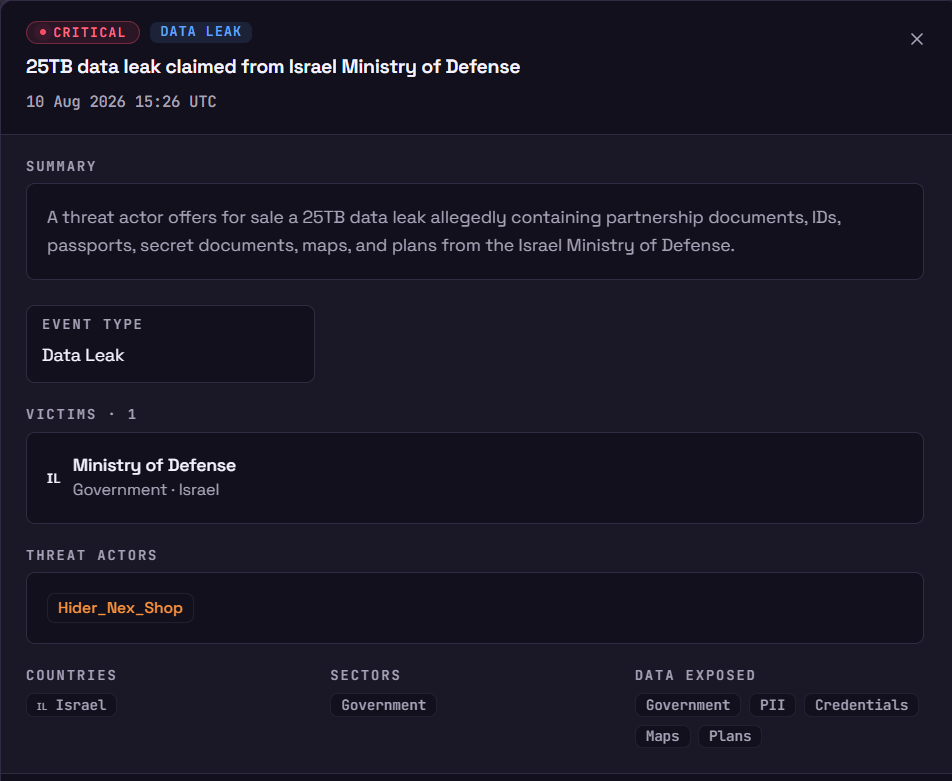
Israel. The largest single claim of the month was 25TB attributed to the Ministry of Defense. A separate listing offered 4GB of ministry email for sale. Israel Police also appeared, with data published by an actor operating under the handle Hider_Nex.
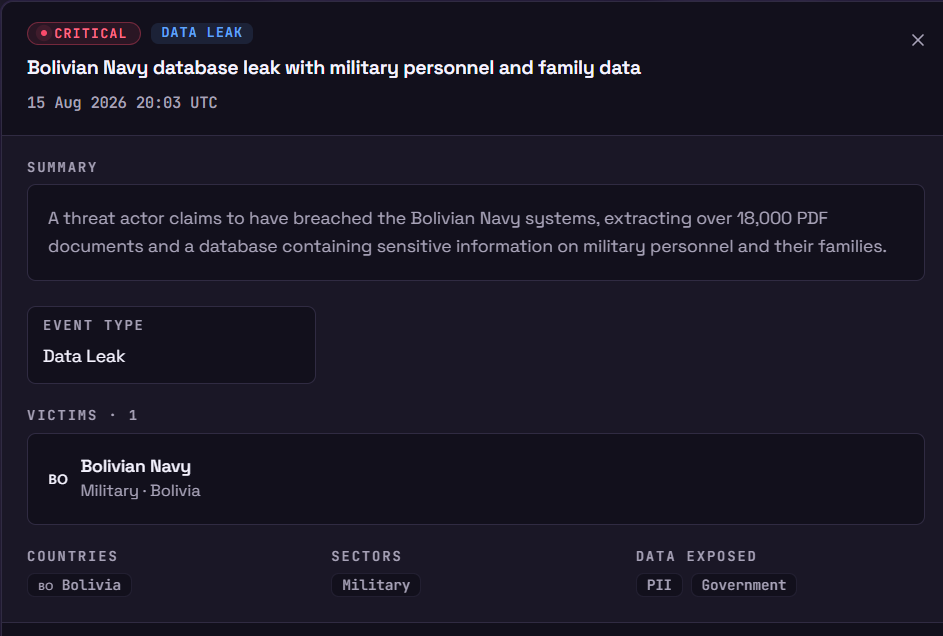
Bolivia. A leak attributed to the Bolivian Navy included personnel records and, according to the listing, data on their family members.
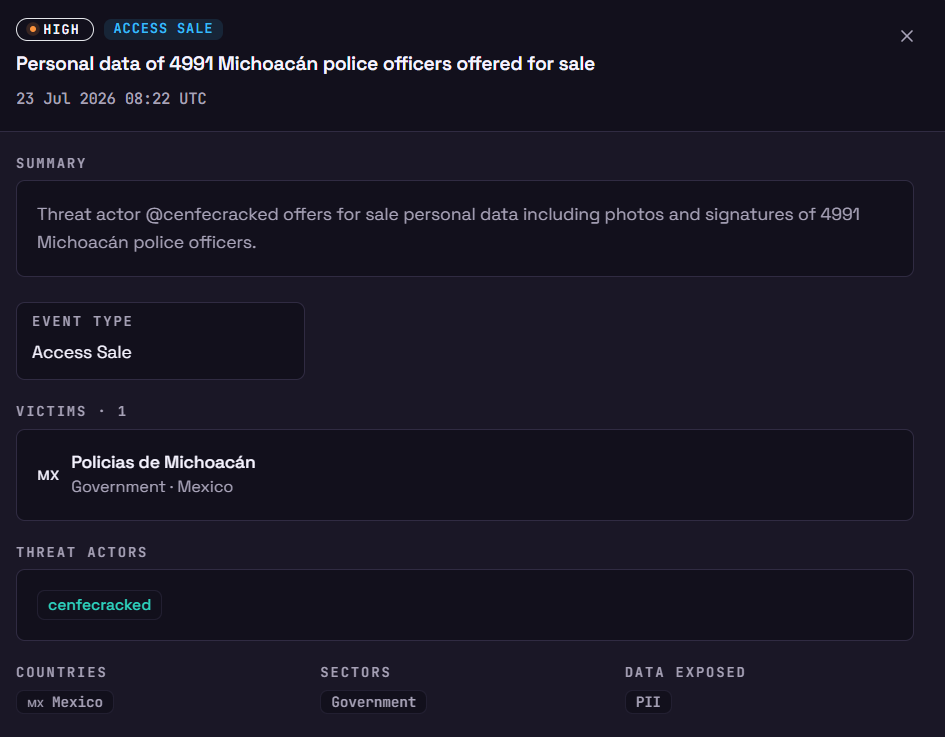
Mexico. Three separate items. Personal data on 4,991 police officers in Michoacán. Databases described as covering Mexican police and government employees. And a set of military conscription applicants from Mérida, Yucatán, covering 2020 to 2026.
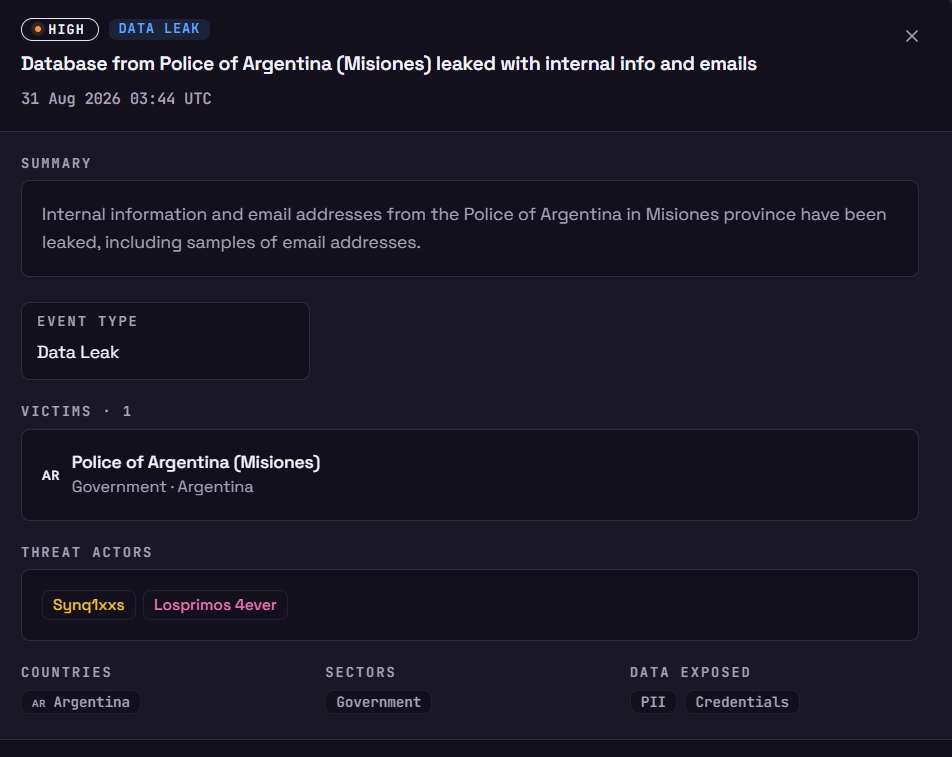
Argentina. Personnel data from the Federal Police, announced rather than sold openly. A provincial police database from Misiones appeared separately, described as containing internal information and email addresses.
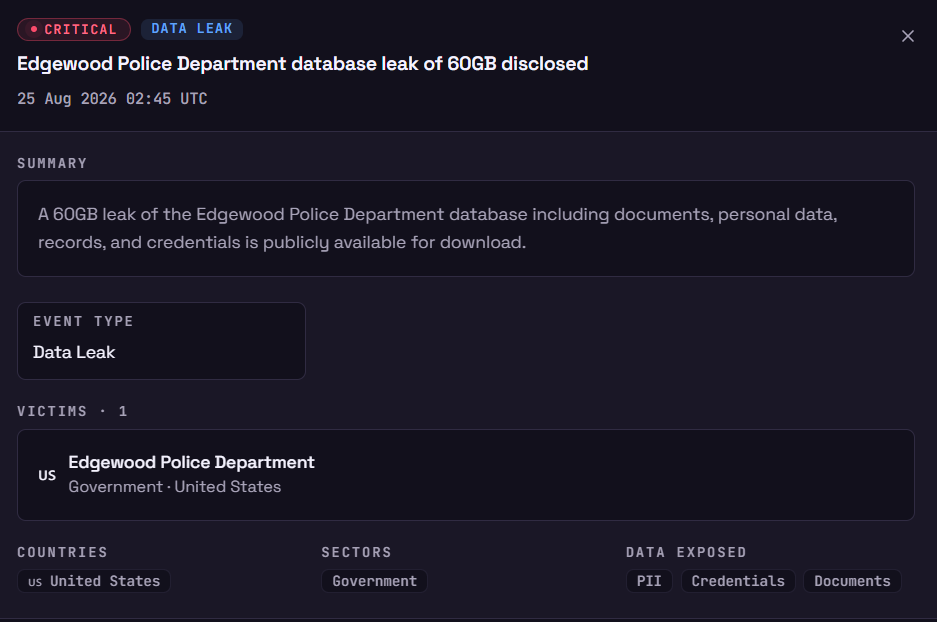
United States. A 60GB database attributed to Edgewood Police Department, classified critical in our feed. A Summerville Police Department database offered for sale. Separately, a document described as a top secret Department of Defense munitions hazard assessment was put up by a seller.
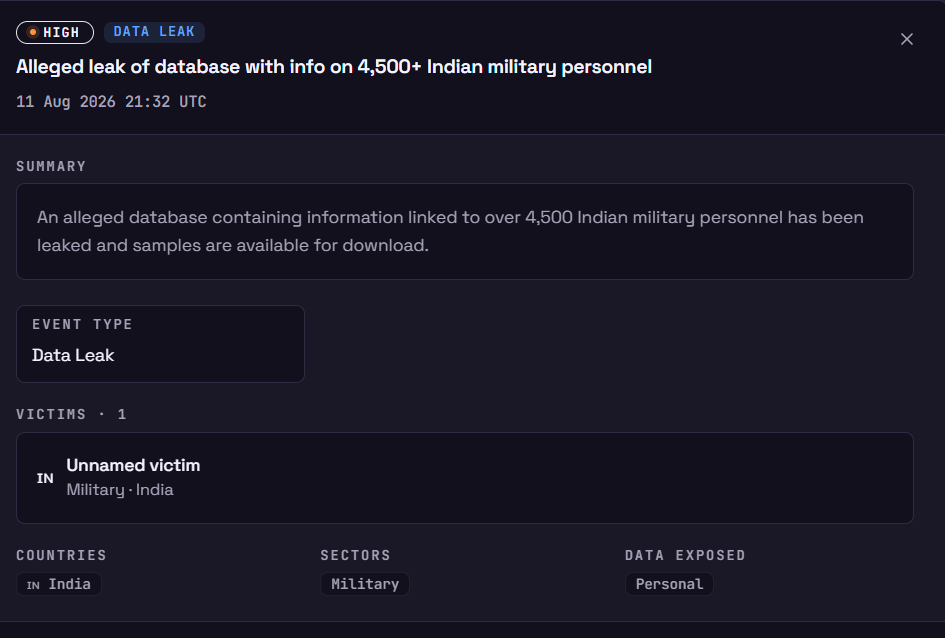
India. An alleged database covering more than 4,500 military personnel.
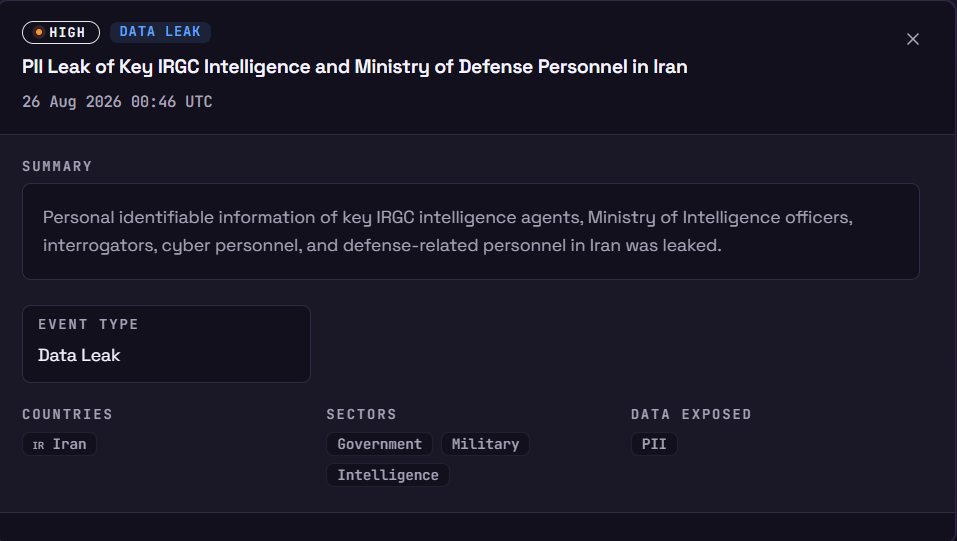
Iran. A listing offering personally identifiable information on IRGC intelligence and Ministry of Defense staff.
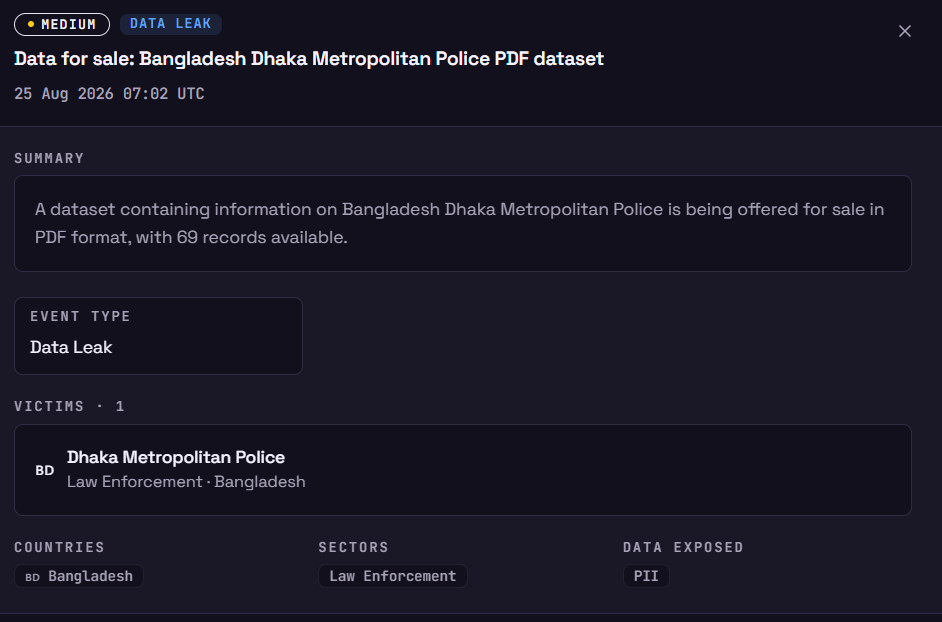
Bangladesh. A dataset attributed to Dhaka Metropolitan Police, offered as a PDF collection.
The detail that changes the category
The Bolivian listing is the one worth pausing on. Personnel data on serving military staff is sensitive by any standard. Personnel data that also covers their families is a different thing entirely.
A customer database is a fraud problem. A roster of named officers, their home addresses and their relatives is a targeting problem, and it stays useful to whoever holds it for as long as those people are alive. There is no equivalent of a password reset.
Where this came from
Every listing above was collected by SINON. We hold membership in the gated forums and criminal channels where this material is offered, watch every tracked ransomware group's own leak site, and read newly issued certificates as they are registered. Findings are scored against each customer's profile, their sector, their regions, the names they ask us to watch, and an alert goes out when something matches.
That is the whole product. You give us the names that matter to your organisation: domains, executives, brands, keywords. We tell you when they appear, with the source and the reason it matched, so the alert arrives ready to act on.
Search your own domain free at sinonsecurity.com.